
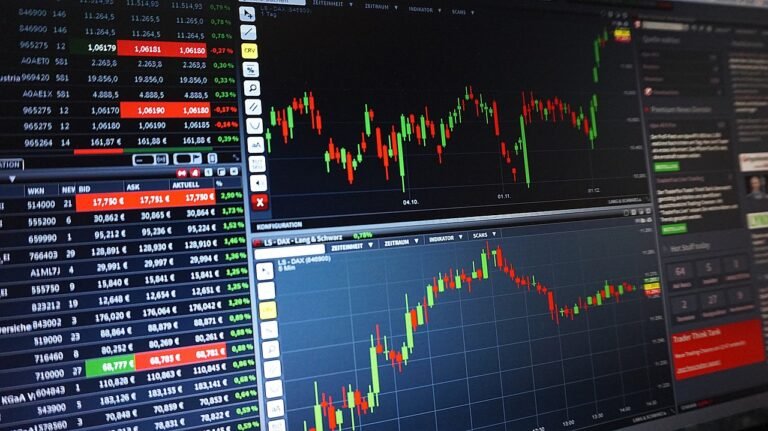
The Simple Moving Average (SMA) is one of the most commonly used technical indicators in trading. It smooths price data by creating a constantly updated average of past prices over a specific period. This tool is essential for traders to make informed decisions. Below, we explore the primary functions of the SMA in trading.
1. Identifying Market Trends
The SMA helps traders identify the overall direction of the market by filtering out short-term price fluctuations. By observing the position of the price relative to the SMA line:
- If the price is consistently above the SMA, it indicates an upward trend.
- If the price is consistently below the SMA, it signals a downward trend.
Example: A 50-day SMA on a stock chart shows a steady upward slope, indicating a long-term bullish trend.
2. Generating Buy and Sell Signals
The SMA can be used to generate trading signals when combined with price action or other indicators:
- A buy signal occurs when the price crosses above the SMA, indicating potential bullish momentum.
- A sell signal is generated when the price crosses below the SMA, suggesting a bearish move.
Example: In a forex chart, the EUR/USD pair crosses above the 20-day SMA, signaling a potential buying opportunity.
3. Acting as Support and Resistance Levels
The SMA often acts as a dynamic support or resistance level. Traders use it to anticipate price reactions in trending markets:
- In an uptrend, the SMA line can act as a support level where prices tend to bounce upward.
- In a downtrend, the SMA can serve as resistance, preventing prices from moving higher.
Example: A stock repeatedly tests and bounces off its 50-day SMA during an uptrend, confirming the SMA as a support level.
4. Smoothing Volatility
By averaging price data, the SMA reduces market noise, making it easier to analyze price movements. This feature is especially useful in volatile markets.
- The SMA eliminates short-term fluctuations, allowing traders to focus on the overall trend.
Example: A trader uses a 100-day SMA on a volatile cryptocurrency to filter out minor price spikes and focus on the long-term trend.
5. Combining with Other Indicators
The SMA is often combined with other indicators for enhanced trading strategies:
- Using SMA with the Relative Strength Index (RSI) to confirm overbought or oversold conditions.
- Combining SMA with Bollinger Bands to identify potential breakouts or reversals.
Example: A trader uses a 50-day SMA along with Bollinger Bands. When the price bounces off the SMA and breaks above the upper Bollinger Band, it signals a strong bullish breakout.
Conclusion
The Simple Moving Average (SMA) is a versatile tool that serves multiple functions in trading. Whether identifying trends, generating signals, or acting as dynamic support and resistance, the SMA is invaluable for both beginner and experienced traders. For more trading strategies and insights, visit tradersnr.com or explore advanced tutorials at tradersnr.com/blog.